
Affiliate platforms: questions to ask before you migrate (SaaS)
A practical checklist for migrating affiliate platforms in SaaS: what to export, how to compare ledgers, how to handle refunds and clawbacks, and the safest cutover plan.
Read articleHow to avoid payout chaos
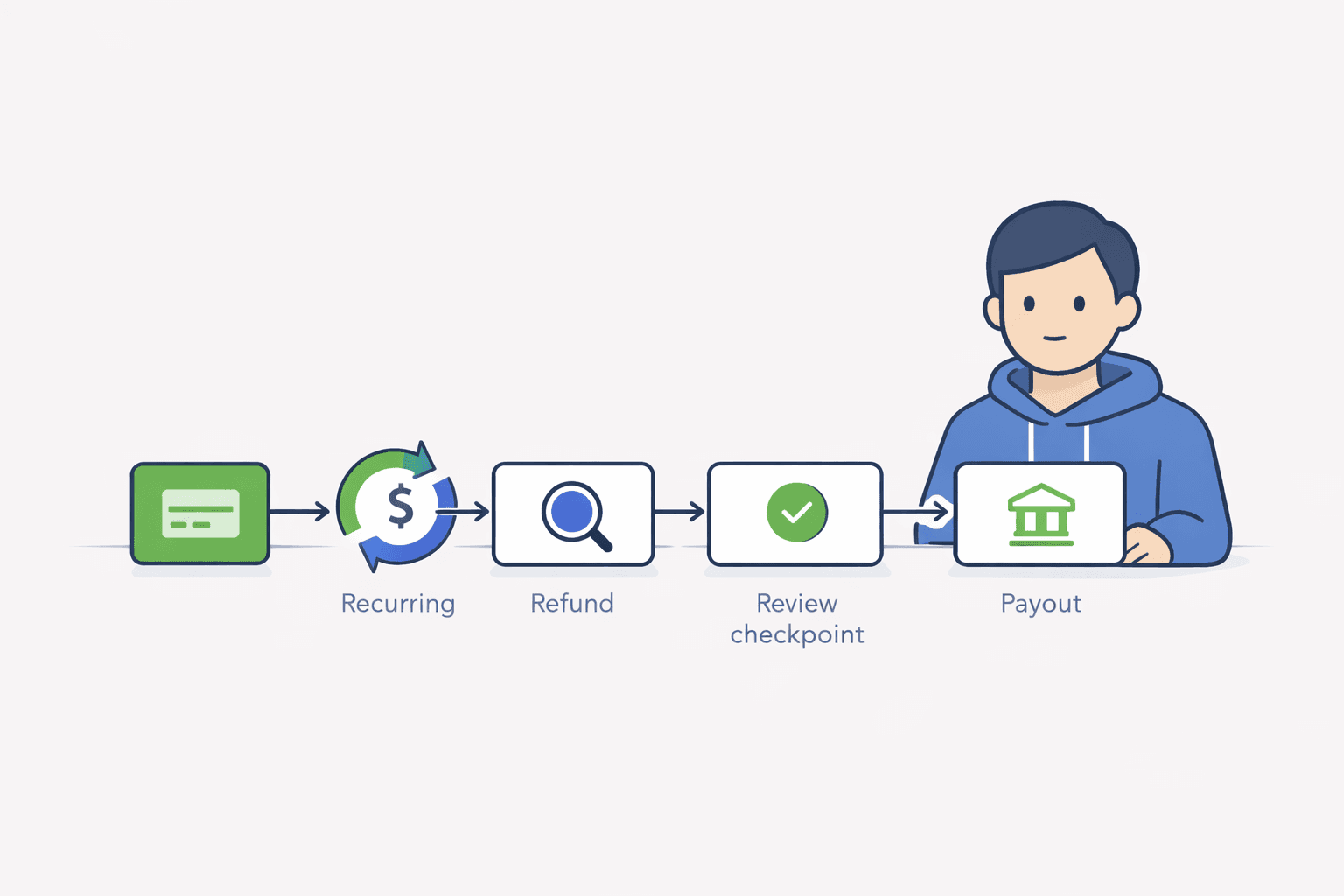
Recurring affiliate commissions in SaaS feel risky because time, churn, and refunds add complexity. The fix is not to avoid them, but to design rules that make payouts predictable.
This article explains how SaaS founders can handle recurring commissions without panic, overpromising, or payout chaos.
Recurring payouts introduce long-term obligations, delayed feedback, and compounding mistakes. Founders worry: What if churn is higher than expected? What if refunds happen after payouts? What if we need to change rules later? These concerns are valid.
The mistake is treating recurring commissions as a fixed promise instead of a designed system.
Lifetime commission sounds attractive. But for early-stage SaaS, it usually means undefined duration, unclear caps, and fear of future regret. Lifetime commissions are not bad. They are risky before churn and LTV are understood.
A safer approach is time-bound or capped recurrence, which preserves flexibility without breaking trust.
Most affiliate guides barely mention refunds. In SaaS, refunds are unavoidable: early churn, failed onboarding, billing mistakes. If refund logic is not explicit, affiliates feel cheated, founders feel exposed, and disputes become emotional.
Healthy programs decide upfront whether refunds claw back commissions, how timing affects payouts, and how adjustments are communicated. Clarity beats generosity here.
Affiliates do not optimize for maximum commission. They optimize for predictability, consistency, and explainability. A lower commission paid reliably beats a higher commission paid inconsistently. Late payouts destroy trust faster than low percentages ever will.
Many successful SaaS programs delay payouts until refund windows close, batch payouts monthly, keep manual review early, and document exceptions clearly. This does not slow growth. It stabilizes relationships.
The most common failure pattern is to automate everything early, discover edge cases later, and patch rules reactively. A healthier pattern is to observe recurring behavior, define rules clearly, and automate only what is stable.
Automation should reduce repetition, not hide uncertainty.
Recurring commissions are not dangerous. Unclear rules are. When refunds, churn, and payout timing are designed intentionally, recurring affiliate programs become predictable and far less stressful.
Even with good payouts, many programs still fail. The reasons are rarely technical.
This article is part of the TinyAffiliate Playbook - practical guidance for SaaS founders who want to test affiliate programs without committing too early or losing control.
Yes, if you can define limits and refund rules. Recurring works when it is time-bound, explainable, and aligned with retention.
Define clawbacks or payout delays upfront, and document exceptions. Clarity prevents disputes.
Monthly payouts after the refund window closes are common because they balance trust and risk.
I share practical notes on affiliate programs for SaaS.No spam. No hype.
Unsubscribe anytime. No spam.
Ready to launch?
If Rewardful feels like overkill, start simple: signup page + links + Stripe-attributed revenue.
A practical checklist for migrating affiliate platforms in SaaS: what to export, how to compare ledgers, how to handle refunds and clawbacks, and the safest cutover plan.
Read article
A founder-friendly guide to affiliate tracking for SaaS subscriptions: which event should earn commission, how to handle trials and plan changes, how recurring commissions work, and the tests that catch broken attribution.
Read article